
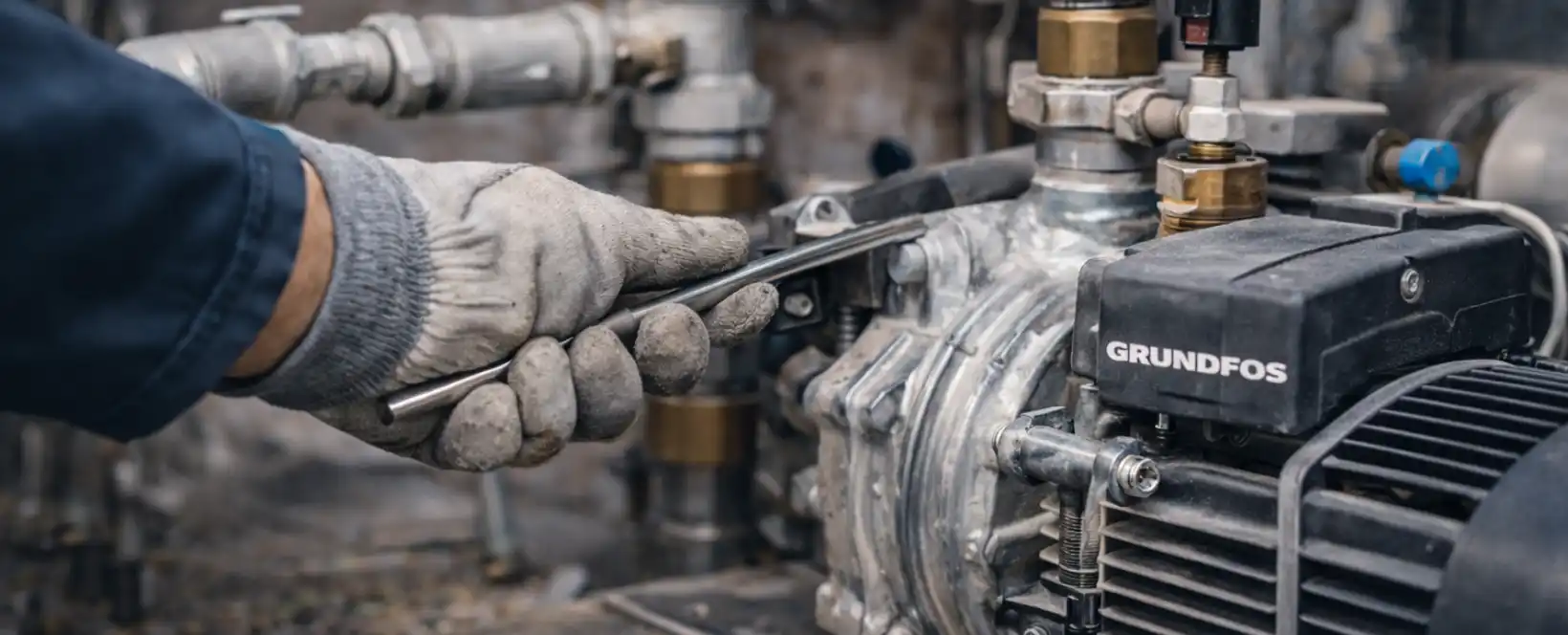
Regular pump maintenance is one of the simplest ways to prevent breakdowns, reduce repair costs and keep your system running reliably. Whether you have a booster pump, drainage pump, sewage pump, wastewater system or control panel, small issues can quickly become expensive faults if they are ignored.
A pump system may still appear to be working while internal components are wearing, filters are becoming restricted, seals are deteriorating or controls are beginning to fail. A structured maintenance checklist helps identify those issues before they cause loss of pressure, flooding, alarms or complete system failure.
This guide explains the essential pump maintenance checks property owners, facilities teams and site managers should understand, along with when to arrange professional servicing.
Why Pump Maintenance Matters
Pump systems often operate in the background, but when they fail the impact can be immediate. Low pressure, wastewater backing up, drainage failure, repeated alarms or loss of water supply can quickly disrupt homes, commercial buildings and operational sites.
Preventative maintenance helps identify wear, blockages, electrical faults and performance issues before they develop into serious failures. It also extends the life of the system and can reduce the need for emergency callouts.
If your system has already started showing faults, you may also find our guide to why pump systems fail useful.
How Often Should a Pump System Be Checked?
Most domestic pump systems should be inspected at least once a year. Commercial, high-use or critical pump systems may need servicing every six months, quarterly, or more frequently depending on the risk level and operating conditions.
Wastewater, sewage and drainage pump systems are especially important to maintain because failure can result in flooding, odours, hygiene risks or environmental issues.
The right schedule depends on the type of pump, how heavily it is used, site conditions, age of the equipment and whether the system is critical to property operation.
Pump Maintenance Checklist
A good pump maintenance checklist should cover the full system, not just the pump body. That means checking mechanical components, pipework, valves, electrical connections, control panels, alarms, pressure vessels and signs of wear.
The checks below are designed to help you understand what should be reviewed during routine pump servicing. Some simple visual checks can be carried out by property owners or site teams, but electrical, mechanical and wastewater system work should be handled by competent engineers.
1. Visual Inspection
Start with a visual inspection of the pump, pipework and surrounding area. Look for leaks, corrosion, damp patches, loose fittings, damaged insulation, cracked pipework or signs that the system has been vibrating excessively.
External signs often reveal developing faults. For example, staining around joints can indicate slow leaks, while movement around the pump base can suggest mounting or vibration issues.
2. Check for Leaks and Air Ingress
Leaks can reduce system pressure and cause the pump to work harder than necessary. Air entering the system can also affect suction, flow and pump performance.
Warning signs include gurgling noises, inconsistent flow, repeated priming issues, pressure loss or the pump running but not moving water properly.
If the pump is running but not pumping water, read our pump running but not pumping water guide.
3. Clean Filters, Strainers and Inlets
Blocked filters and strainers are a common cause of poor pump performance. As debris builds up, the pump has to work harder, which can lead to overheating, noise, reduced flow and premature component wear.
Filters, strainers and accessible inlets should be cleaned as part of routine maintenance. If debris keeps returning, the wider system may need investigation.
4. Inspect Valves and Pipework
Valves should be checked to confirm they open and close correctly, are not stuck, and are not restricting flow. Non-return valves, isolation valves and pressure-related fittings can all affect system performance.
Pipework should also be checked for vibration, poor support, blockages, damage or incorrect configuration. Poorly supported pipework can transfer vibration and increase wear on the pump system.
5. Check Pressure Vessel and Pressure Switch Operation
Pressure vessels and pressure switches help regulate pump operation. If either component fails, the pump may start short cycling, lose pressure or operate unpredictably.
Short cycling is when a pump turns on and off too frequently. This places extra strain on the system and can significantly reduce pump lifespan.
If this is already happening, see our guide to why a pump keeps turning on and off.
6. Test Float Switches, Sensors and Alarms
For drainage, sewage and wastewater pumps, float switches, level sensors and alarms are critical safety components. If they fail, the system may not activate when required, or it may fail to warn you before levels become dangerous.
These components should be tested during servicing to ensure they activate correctly and trigger the appropriate alarm or pump response.
7. Review Electrical Connections and Control Panels
Electrical components should be checked for damage, overheating, loose connections, tripping issues, water ingress and signs of age. Control panels should also be reviewed for alarms, error codes and correct pump sequencing.
Do not ignore repeated electrical faults or control panel warnings. These may indicate a developing issue that could lead to complete system failure.
For cost guidance, see our pump control panel replacement cost guide.
8. Listen for Noise and Vibration
Noise and vibration can be early warning signs of mechanical wear, loose components, cavitation, poor alignment or bearing failure.
Grinding, rattling, knocking, humming or screeching should not be ignored, especially if the noise has suddenly appeared or is getting worse.
If this is your main issue, read our noisy pump troubleshooting guide.
9. Check Pump Performance
Pump performance should be checked against expected pressure, flow and operating behaviour. A system that is slowly losing performance may still run, but it may no longer be operating efficiently.
Reduced pressure, longer running times, inconsistent flow and rising energy usage can all point to developing faults.
10. Keep Maintenance Records
Every service, inspection, repair and component replacement should be recorded. Maintenance records help identify recurring faults, support warranty claims and provide useful evidence when selling or managing a property.
For commercial sites, good records also support planned maintenance, compliance management and budgeting.
Warning Signs Your Pump Needs Attention
Arrange an inspection if you notice unusual noise, vibration, repeated alarms, low pressure, frequent cycling, leaks, overheating, burning smells, blockages or the pump running without moving water.
These symptoms can indicate developing failure. Early diagnosis is usually cheaper and safer than waiting for a complete breakdown.
Professional Pump Servicing
A professional pump service should include mechanical checks, electrical checks, control panel review, performance testing, leak checks, sensor testing, cleaning and advice on any parts showing signs of wear.
At Alton Facility Services, we provide pump inspections, servicing, fault-finding, maintenance and repair support for domestic, commercial and wastewater pump systems.
Need help maintaining your pump system? Contact our team or call 01420 561661 to arrange a pump inspection.
How AFS would diagnose the pump fault
Pump faults are often caused by more than the pump itself. AFS would normally check the pump, floats, valves, non-return valves, control panel, electrical supply, alarm circuit, discharge pipework, chamber condition and signs of blockage or overload.
Where the system is critical, the safest route may be urgent pump station repair, planned pump servicing, or a properly specified pump installation rather than repeated temporary resets.
Repair, servicing or replacement?
A pump can often be repaired if the issue is a blockage, float fault, worn component or control issue. Replacement is more likely where the pump is badly worn, incorrectly sized, unreliable, obsolete or repeatedly failing.
For sewage and wastewater systems, AFS can also review the wider chamber, rising main and control arrangement. That matters because a new pump will not solve a poor installation, undersized rising main or failed control panel.
Useful related AFS services
Useful next pages include pump servicing, pump installation, pump station repair services, package pump stations and sewage pumps.
Need practical help with this?
For pump faults, pump station alarms, servicing, repair and replacement, AFS can check the wider system and advise whether the issue is mechanical, electrical, hydraulic or installation-related. You can call 01420 561661 or send details through the contact form.
Call AFS on 01420 561661 or send the details through for practical advice.
Contact AFSFrequently asked questions
How often should a pump system be serviced?
Most domestic pump systems should be serviced at least once a year. Commercial, high-use, drainage or wastewater systems may need servicing every six months or more frequently depending on risk.
What is included in pump maintenance?
Pump maintenance usually includes visual inspection, leak checks, filter and strainer cleaning, valve checks, electrical checks, control panel review, sensor testing and performance checks.
Can pump maintenance prevent breakdowns?
Regular maintenance significantly reduces the risk of breakdowns by identifying wear, blockages, leaks and control faults before they become serious.
Can I service a pump system myself?
Basic visual checks can be carried out by property owners, but electrical, mechanical, control panel and wastewater pump servicing should be handled by competent engineers.
What are signs a pump needs servicing?
Common signs include noise, vibration, low pressure, leaks, alarms, overheating, frequent cycling, inconsistent flow or the pump running without moving water.
Can AFS diagnose pump faults as well as replace pumps?
Yes. AFS can check the pump, floats, panel, alarms, pipework and chamber to determine whether repair, servicing or replacement is the right option.