
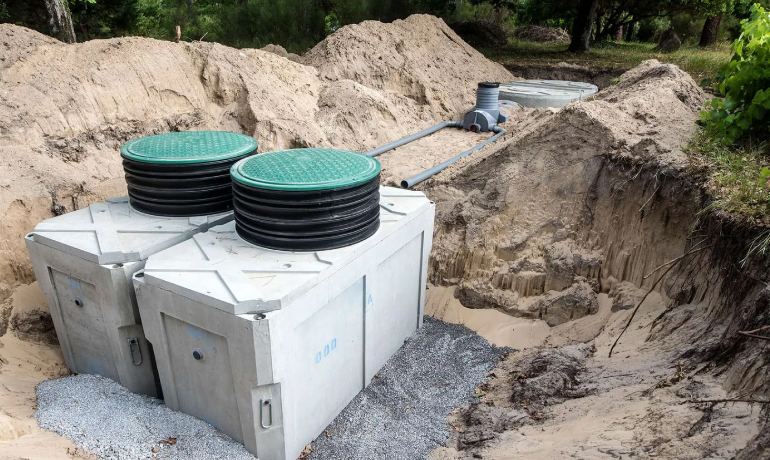
Across Hampshire and Surrey, many rural homes and commercial sites operate without a mains drainage connection. For these properties, a reliable and compliant sewage treatment system is essential.
The right system depends on site layout, soil type, discharge route, usage, access and current Environment Agency requirements.
This guide explains the main options, how they work, what affects cost, and when a septic tank may need upgrading to a modern sewage treatment plant.
What Is a Sewage Treatment System?
A sewage treatment system treats wastewater from a property before it is discharged safely to the ground or, where permitted, to a watercourse.
Treatment normally involves separating solids and liquids, biological treatment using bacteria, and final settlement or filtration before discharge.
The system must be suitable for the property, site conditions and discharge method.
Main Options for Off-Mains Drainage
The main options are septic tanks, sewage treatment plants, package treatment plants and, in some cases, reed bed systems.
Septic tanks provide primary treatment only and normally rely on a suitable drainage field.
Sewage treatment plants use aeration and biological treatment to produce a cleaner effluent, making them more suitable for many modern installations.
Septic Tanks
A septic tank separates solids from wastewater. Solids settle as sludge, lighter material forms scum, and partially treated liquid flows onward to a drainage field.
They can still be suitable for some existing rural properties, but they have limitations.
For a full comparison, see septic tank vs sewage treatment plant.
Sewage Treatment Plants
A sewage treatment plant provides a higher level of treatment than a septic tank by using air and aerobic bacteria to break down waste more effectively.
This makes treatment plants a common choice for new installations, upgrades and sites where a watercourse discharge may be required.
Read how sewage treatment plants work for a clearer step-by-step explanation.
Package Treatment Plants
Package treatment plants are larger systems used for multiple properties, developments, commercial sites or higher wastewater loads.
They need careful specification, installation, commissioning and maintenance to remain reliable.
These systems are often relevant for sites around Winchester, Basingstoke, Woking and Guildford where development or commercial use creates higher demand.
Choosing the Right System
The correct system depends on soil type, site size, daily flow, number of occupants, discharge route, access for machinery and future maintenance requirements.
Clay-heavy ground, nearby watercourses, restricted access or protected landscapes can all affect the best solution.
A professional site assessment should normally come before installation or upgrade decisions.
Regulations and Compliance
Small sewage discharges in England are controlled by the Environment Agency's General Binding Rules where a permit is not required.
Property owners are responsible for ensuring the system is correctly installed, properly maintained and not causing pollution.
See our sewage treatment regulations guide before installing, replacing or modifying a system.
Typical Costs
Costs vary depending on the system type, site conditions, excavation, drainage field requirements, discharge method, electrical supply and access.
A sewage treatment plant installation is usually a larger investment than a septic tank, but it can be more future-proof where compliance or watercourse discharge is a concern.
For more detail, read sewage treatment system costs in Hampshire and Surrey.
Maintenance Requirements
Treatment systems need regular servicing and periodic emptying to remain reliable and compliant.
Sewage treatment plants also need checks on pumps, aerators, controls and alarms.
See our sewage treatment maintenance guide for what should be checked.
Get Expert Advice
Alton Facility Services helps with sewage treatment plant installation, septic tank conversion, compliance advice, servicing and repairs across Hampshire, Surrey and surrounding areas.
Need help choosing the right system? Contact our team or call 01420 561661.
How AFS would investigate this on site
For off-mains drainage issues, we would normally start by checking the tank or treatment plant, inlet and outlet pipework, alarms, pumps, blowers, sludge levels, drainage field condition and any signs of surcharge or pollution.
If the issue looks compliance-related, we would also consider whether the existing arrangement needs septic tank conversion, a new sewage treatment plant installation, or planned treatment plant maintenance rather than another temporary repair.
When this becomes urgent
You should treat the problem as urgent if sewage is backing up into the property, wastewater is escaping outside, alarms are sounding repeatedly, electrical equipment is wet, or the system is close to overflowing.
In those situations, stop unnecessary water use, keep people away from contaminated areas and arrange professional attendance. Where the system needs emptying before repair, sewage tanker services may be required to control the level safely.
Useful related AFS services
The most relevant AFS services for this topic are sewage treatment plant installation, treatment plant maintenance, septic tank conversion and sewage tanker services. These pages explain the practical options in more detail.
Need practical help with this?
For sewage treatment plants, septic tanks, private drainage systems and tanker support across Hampshire, Surrey and nearby areas, AFS can inspect the system and recommend the practical next step. You can call 01420 561661 or send details through the contact form.
Call AFS on 01420 561661 or send the details through for practical advice.
Contact AFSFrequently asked questions
Do I need a sewage treatment plant instead of a septic tank?
You may need a sewage treatment plant if your current septic tank cannot meet discharge or compliance requirements, especially where a watercourse is involved.
How often should a sewage treatment plant be serviced?
Most sewage treatment plants should be serviced at least once a year, with more frequent checks for high-use or commercial systems.
Can a septic tank discharge to a watercourse?
Septic tanks are not suitable for direct discharge to watercourses under current rules; an upgrade may be needed.
How much does a sewage treatment system cost?
Costs vary by system type, site conditions and groundworks. A survey is needed for a reliable quote.
Who is responsible for compliance?
The property owner or operator is responsible for ensuring the system is installed, maintained and operated correctly.
Can AFS inspect a private sewage system before quoting?
Yes. For sewage treatment plants, septic tanks, pump chambers and private drainage systems, AFS can inspect the site, identify the likely cause and advise whether servicing, repair, tanker attendance, conversion or replacement is appropriate.