
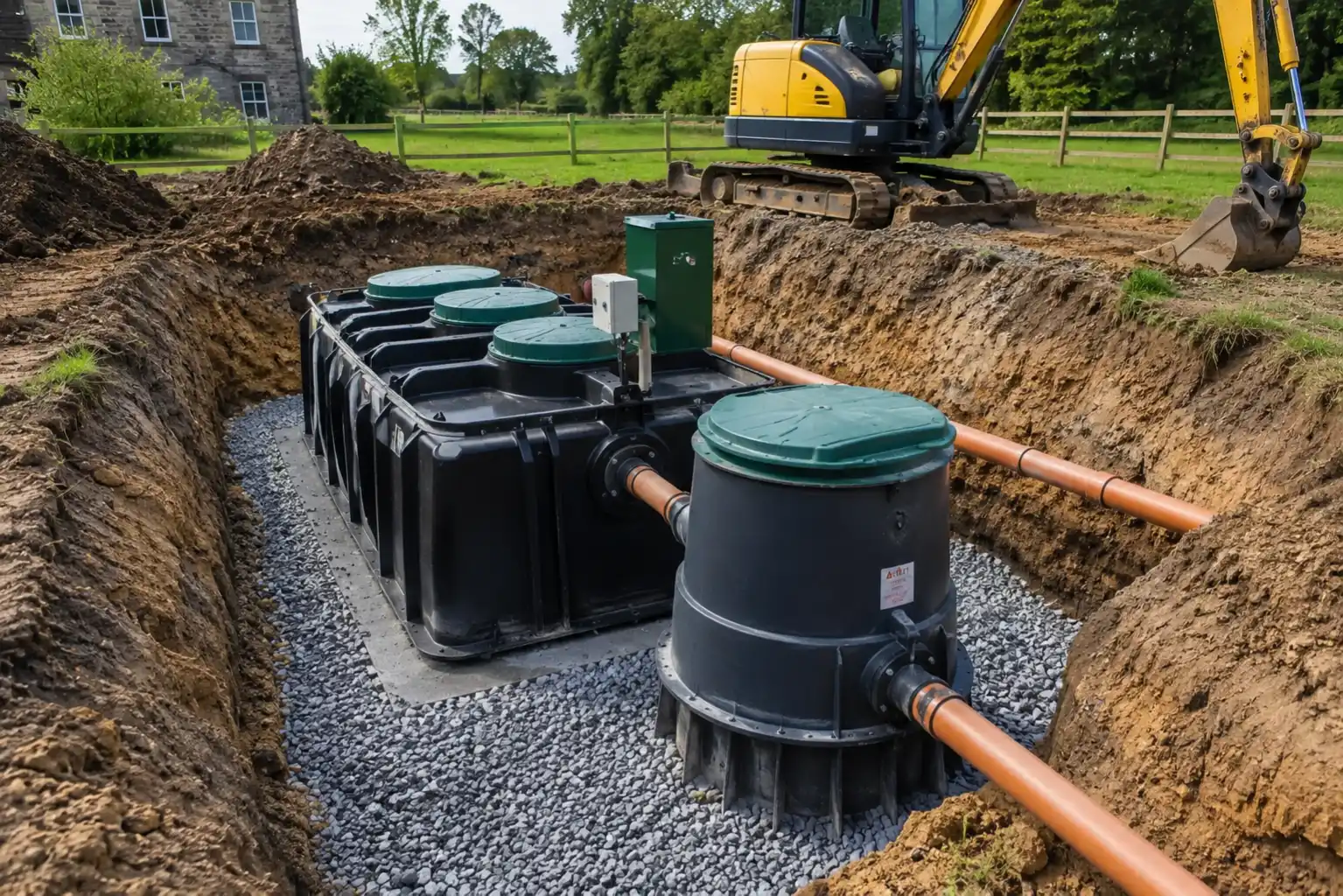
A sewage treatment plant treats wastewater from a property so it can be safely discharged in line with site requirements.
The process uses separation, aeration and biological treatment to produce much cleaner effluent than a septic tank.
This guide explains the process in simple terms.
Quick Answer
A sewage treatment plant works by separating solids, using air to support bacteria that break down waste, settling remaining solids and discharging treated effluent safely.
The system must be correctly installed and maintained to work properly.
Stage 1: Primary Settlement
Wastewater enters the first chamber. Heavier solids settle as sludge and lighter material rises to the surface.
This first stage prepares the liquid for biological treatment.
Stage 2: Aeration
Air is introduced into the treatment chamber to encourage aerobic bacteria.
These bacteria break down organic matter more effectively than a septic tank alone.
Stage 3: Biological Treatment
The bacteria reduce contamination in the wastewater by digesting organic material.
This is the key process that makes treatment plants more effective than primary treatment systems.
Stage 4: Final Settlement
Fine solids settle before the treated effluent leaves the system.
A correctly operating plant should produce cleaner effluent suitable for the approved discharge route.
Stage 5: Discharge
Treated effluent may discharge to the ground or a watercourse depending on system design, approvals and site conditions.
Read the regulations guide before altering a discharge route.
Why Maintenance Matters
Treatment plants rely on mechanical and biological processes. If pumps, blowers, controls or bacteria are disrupted, performance can fall.
See our maintenance guide for recommended checks.
Warning Signs a Treatment Plant Is Not Working Properly
Common warning signs include persistent odour, high water levels, alarm activation, unusual blower noise, slow drainage, poor effluent quality or soggy ground near the discharge area.
A single symptom does not always identify the fault, because issues can come from pumps, blowers, controls, blocked pipework, poor servicing or biological imbalance.
If sewage or wastewater is escaping, keep people away from the affected area and arrange professional advice quickly.
What a Service Visit Usually Checks
A service visit may check mechanical and electrical components, air supply, pumps, alarms, sludge levels, flow paths, covers, pipework and visible discharge conditions.
The engineer should also look for signs of misuse, high loading, blocked filters, damaged equipment or parts that are likely to fail soon.
Regular servicing helps the plant keep treating wastewater correctly and can reduce the chance of emergency breakdowns.
Simple Owner Checks Between Services
Listen for changes in blower or pump noise, check that alarms are not ignored and keep the area around the plant accessible for servicing and emptying.
Avoid flushing wipes, sanitary products, fats, oils, harsh chemicals or non-biodegradable materials into the system because they can affect performance.
If the system starts to smell, flood, back up or trigger alarms, arrange a check rather than waiting for the issue to become a larger failure.
Get Help With Installation or Servicing
Alton Facility Services installs, maintains and repairs sewage treatment plants across Hampshire and Surrey.
Need help? Contact our team or call 01420 561661.
Why understanding the process helps prevent faults
A treatment plant relies on flow, oxygen, bacteria, settlement and discharge all working together. If one stage fails, the rest of the system can quickly become overloaded.
That is why servicing usually checks mechanical parts and treatment performance, not just whether the plant is making a noise.
How AFS would investigate this on site
For off-mains drainage issues, we would normally start by checking the tank or treatment plant, inlet and outlet pipework, alarms, pumps, blowers, sludge levels, drainage field condition and any signs of surcharge or pollution.
If the issue looks compliance-related, we would also consider whether the existing arrangement needs septic tank conversion, a new sewage treatment plant installation, or planned treatment plant maintenance rather than another temporary repair.
When this becomes urgent
You should treat the problem as urgent if sewage is backing up into the property, wastewater is escaping outside, alarms are sounding repeatedly, electrical equipment is wet, or the system is close to overflowing.
In those situations, stop unnecessary water use, keep people away from contaminated areas and arrange professional attendance. Where the system needs emptying before repair, sewage tanker services may be required to control the level safely.
Useful related AFS services
The most relevant AFS services for this topic are sewage treatment plant installation, treatment plant maintenance, septic tank conversion and sewage tanker services. These pages explain the practical options in more detail.
Need practical help with this?
For sewage treatment plants, septic tanks, private drainage systems and tanker support across Hampshire, Surrey and nearby areas, AFS can inspect the system and recommend the practical next step. You can call 01420 561661 or send details through the contact form.
Call AFS on 01420 561661 or send the details through for practical advice.
Contact AFSFrequently asked questions
Do sewage treatment plants smell?
A properly installed and maintained treatment plant should produce very little noticeable odour.
Do they use electricity?
Yes, most modern treatment plants use electricity for aeration or pumping components.
Can treated water discharge to a ditch?
It may be possible with the correct system and compliant discharge, but site-specific rules must be checked.
How often should they be serviced?
Typically at least annually, but high-use systems may need more frequent servicing.
What happens if the blower fails?
A failed blower can reduce oxygen supply, harming treatment performance and potentially causing odours or failure.
Can AFS inspect a private sewage system before quoting?
Yes. For sewage treatment plants, septic tanks, pump chambers and private drainage systems, AFS can inspect the site, identify the likely cause and advise whether servicing, repair, tanker attendance, conversion or replacement is appropriate.