Regular maintenance keeps sewage treatment systems working safely, efficiently and compliantly.
Without servicing, sludge build-up, failed components, odours, slow drainage and system failure become more likely.
This guide explains what should be checked and why planned maintenance matters.
Quick Answer
Most sewage treatment plants should be professionally serviced at least once a year, with sludge emptying as required.
High-use or commercial systems may need more frequent checks.
Why Maintenance Matters
Maintenance helps prevent failures, odours, pollution risk and expensive emergency repairs.
It also supports compliance by showing that the system has been looked after properly.
What Should Be Checked?
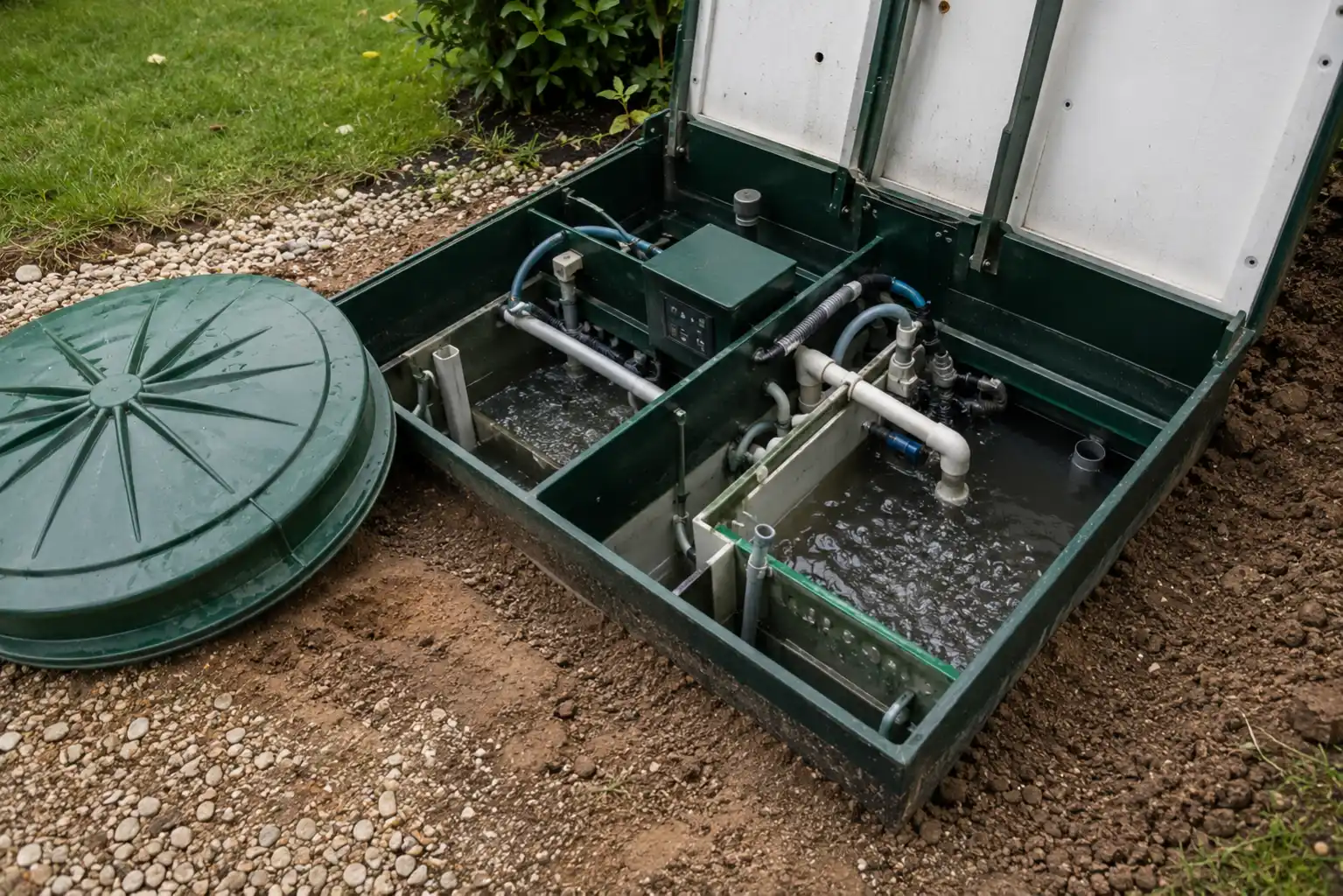
A service should check sludge levels, pumps, blowers, filters, alarms, control panels, pipework, chambers and discharge performance.
The engineer should also look for early warning signs such as smells, slow drainage or high-level alarms.
Sludge Emptying
All systems accumulate sludge over time. If sludge is not removed, treatment performance can fall and blockages can occur.
Emptying frequency depends on system type, capacity and usage.
Treatment Plant Components
Treatment plants include mechanical and electrical parts such as blowers, aerators, pumps, controls and alarms.
These parts should be checked before they fail.
For a simple explanation of the treatment process, read how sewage treatment plants work.
Septic Tank Maintenance
Septic tanks need emptying and drainage field checks.
The drainage field must be protected from compaction, unsuitable planting and surface water overload.
Warning Signs Between Services
Book a check if you notice odours, slow drainage, pooling water, alarms, unusual noise or sewage backing up.
See common sewage system problems for troubleshooting advice.
Maintenance Records
Keep service records, emptying receipts and repair notes. They can be useful for compliance, property sales and future diagnosis.
A clear record helps show whether faults are isolated or recurring.
Book Maintenance
Alton Facility Services provides servicing and maintenance support for sewage treatment plants and off-mains drainage systems.
Need a maintenance plan? Contact our team or call 01420 561661.
What a maintenance visit should record
A useful maintenance visit should record blower condition, pump operation, alarm function, sludge level, visible effluent quality, chamber condition, electrical issues, signs of surcharge and recommended actions.
This gives the property owner a maintenance history, helps spot repeat faults, and supports compliance if the system is later questioned.
How AFS would investigate this on site
For off-mains drainage issues, we would normally start by checking the tank or treatment plant, inlet and outlet pipework, alarms, pumps, blowers, sludge levels, drainage field condition and any signs of surcharge or pollution.
If the issue looks compliance-related, we would also consider whether the existing arrangement needs septic tank conversion, a new sewage treatment plant installation, or planned treatment plant maintenance rather than another temporary repair.
When this becomes urgent
You should treat the problem as urgent if sewage is backing up into the property, wastewater is escaping outside, alarms are sounding repeatedly, electrical equipment is wet, or the system is close to overflowing.
In those situations, stop unnecessary water use, keep people away from contaminated areas and arrange professional attendance. Where the system needs emptying before repair, sewage tanker services may be required to control the level safely.
Useful related AFS services
The most relevant AFS services for this topic are sewage treatment plant installation, treatment plant maintenance, septic tank conversion and sewage tanker services. These pages explain the practical options in more detail.
Need practical help with this?
For sewage treatment plants, septic tanks, private drainage systems and tanker support across Hampshire, Surrey and nearby areas, AFS can inspect the system and recommend the practical next step. You can call 01420 561661 or send details through the contact form.
Call AFS on 01420 561661 or send the details through for practical advice.
Contact AFSFrequently asked questions
How often should a sewage treatment plant be serviced?
Usually at least once a year, with more frequent checks for high-use, commercial or problematic systems.
What happens if I do not maintain my system?
It may become inefficient, smell, fail, pollute or fall out of compliance.
How often should a tank be emptied?
Many systems need emptying every one to two years, but frequency depends on usage and system size.
Can maintenance prevent smells?
Yes, servicing can help identify causes such as sludge build-up, failed aeration or blocked pipework.
Are service records useful?
Yes, especially for compliance, repairs and property sales.
Can AFS inspect a private sewage system before quoting?
Yes. For sewage treatment plants, septic tanks, pump chambers and private drainage systems, AFS can inspect the site, identify the likely cause and advise whether servicing, repair, tanker attendance, conversion or replacement is appropriate.