
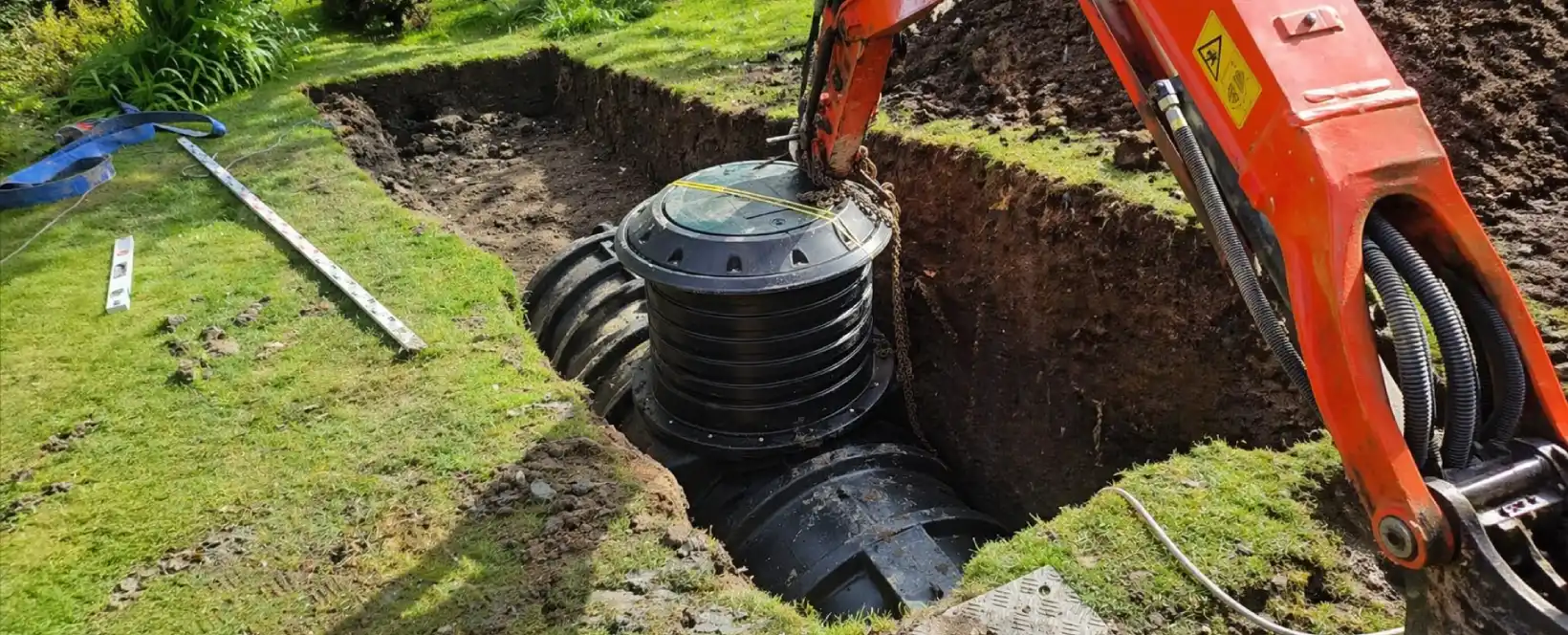
Sewage treatment system costs vary depending on the system type, site conditions, discharge method and groundworks required.
A low-cost option is not always the best long-term solution if it creates compliance or maintenance problems.
This guide explains typical cost factors for Hampshire and Surrey properties.
Quick Answer
Typical septic tank installations may range from around £3,000 to £7,000, while sewage treatment plants often range from around £6,000 to £15,000+ depending on site conditions.
Running costs, servicing, emptying and repairs should also be considered.
Septic tank replacement cost
Replacing a septic tank costs at least as much as a new installation: around £3,000 to £7,000 for a like-for-like septic tank, or around £6,000 to £15,000+ for a sewage treatment plant. On top of that, the old tank has to be emptied and then removed or filled in, and the drainage field may need replacing too.
Like-for-like is only an option if the tank discharges to the ground through a working drainage field. If your septic tank discharges straight to a stream, river or ditch, the general binding rules mean it has to be upgraded, usually to a sewage treatment plant (see septic tank conversion), or connected to the mains sewer.
If a public sewer runs within 30 metres of your property, you may need to connect to it instead.
What affects the cost of replacing a septic tank
The size of tank your household needs.
A septic tank or a treatment plant. Treatment plants cost more to buy and need electricity.
Digging conditions. Clay, rock, groundwater and depth all affect the excavation.
Access for a digger and a tanker.
Removing or filling in the old tank.
The drainage field. Whether it needs replacing, and a ground test to design a new one.
Pipe runs and levels. A pump may be needed if the levels do not allow the waste to flow by gravity.
Electrics for a treatment plant.
Putting lawns and driveways back.
Building Regulations approval. This is normally needed for a new tank or drainage field.
Septic Tank Installation Costs
Septic tanks are usually cheaper upfront because they have fewer mechanical components.
Costs can rise if a new drainage field, difficult excavation or access work is required.
Sewage Treatment Plant Costs
Treatment plants usually cost more because they use a more advanced treatment process with mechanical and electrical components.
They may be better value long term where compliance or watercourse discharge is important.
Running Costs
Most treatment plants require electricity, usually for aeration or pumping components.
Modern systems are designed to be efficient, but electricity should still be allowed for in lifetime costs.
Servicing Costs
Annual servicing is recommended for sewage treatment plants to check pumps, blowers, controls and treatment performance.
Our maintenance guide explains what should be checked.
Emptying Costs
Both septic tanks and treatment plants need periodic emptying to remove sludge.
Frequency depends on system type, usage and tank size, but many domestic systems need emptying every one to two years.
Hidden Cost Factors
Costs can increase because of poor access, deep excavation, tree roots, clay soil, groundwater, proximity to buildings or the need for pumping equipment.
A site survey is the safest way to avoid surprises.
Repair or Replace?
Older systems with compliance issues can become expensive to maintain.
If faults are recurring, read signs your sewage system needs replacing.
Get a Tailored Quote
Alton Facility Services can assess your site and recommend a suitable system based on compliance, access and long-term value.
Need a costed proposal? Contact our team or call 01420 561661.
Why a site survey changes the price
Two properties can need the same size treatment plant but have very different installation costs. Access, depth, groundwater, existing pipe levels, discharge point, electrics, reinstatement and ground conditions all affect the final price.
A proper quotation should separate plant supply, excavation, pipework, electrical works, commissioning, waste disposal, tanker attendance and reinstatement so you can see what is included.
How AFS would investigate this on site
For off-mains drainage issues, we would normally start by checking the tank or treatment plant, inlet and outlet pipework, alarms, pumps, blowers, sludge levels, drainage field condition and any signs of surcharge or pollution.
If the issue looks compliance-related, we would also consider whether the existing arrangement needs septic tank conversion, a new sewage treatment plant installation, or planned treatment plant maintenance rather than another temporary repair.
When this becomes urgent
You should treat the problem as urgent if sewage is backing up into the property, wastewater is escaping outside, alarms are sounding repeatedly, electrical equipment is wet, or the system is close to overflowing.
In those situations, stop unnecessary water use, keep people away from contaminated areas and arrange professional attendance. Where the system needs emptying before repair, sewage tanker services may be required to control the level safely.
Useful related AFS services
The most relevant AFS services for this topic are sewage treatment plant installation, treatment plant maintenance, septic tank conversion and sewage tanker services. These pages explain the practical options in more detail.
Need practical help with this?
For sewage treatment plants, septic tanks, private drainage systems and tanker support across Hampshire, Surrey and nearby areas, AFS can inspect the system and recommend the practical next step. You can call 01420 561661 or send details through the contact form.
Call AFS on 01420 561661 or send the details through for practical advice.
Contact AFSFrequently asked questions
How much does a sewage treatment plant cost?
Costs vary, but many domestic installations may range from around £6,000 to £15,000+ depending on site conditions.
How much does a septic tank cost?
A septic tank installation may range from around £3,000 to £7,000, but groundworks and drainage field requirements can increase costs.
Are there hidden costs?
Yes. Groundworks, difficult access, drainage fields, pumping equipment and electrical work can all affect cost.
How much does servicing cost?
Servicing may range from around £100 to £300 per year depending on system type and provider.
Is replacement cheaper than repair?
For older or non-compliant systems, replacement may be better value over the long term.
Can AFS inspect a private sewage system before quoting?
Yes. For sewage treatment plants, septic tanks, pump chambers and private drainage systems, AFS can inspect the site, identify the likely cause and advise whether servicing, repair, tanker attendance, conversion or replacement is appropriate.
How much does it cost to replace a septic tank?
Typically around £3,000 to £7,000 for a like-for-like septic tank, or around £6,000 to £15,000+ to replace it with a sewage treatment plant, plus the cost of removing the old tank and any new drainage field. A site survey gives you a firm price.
Do I have to replace my septic tank with a treatment plant?
Not always. If it discharges to the ground through a working drainage field and meets the general binding rules, a like-for-like replacement can be fine. If it discharges straight to a watercourse, it must be upgraded or connected to the mains sewer.