
This article gives practical guidance for drainage, pump and wastewater issues. If you need urgent help, call AFS on 01420 561661.
Cesspit vs Septic Tank vs Treatment Plant: What’s Right for Your Property?
Choosing the right waste management solution for your property can be confusing. This guide compares cesspits, septic tanks, and sewage treatment plants to help you decide which one is best for your needs.
What is a Cesspit?
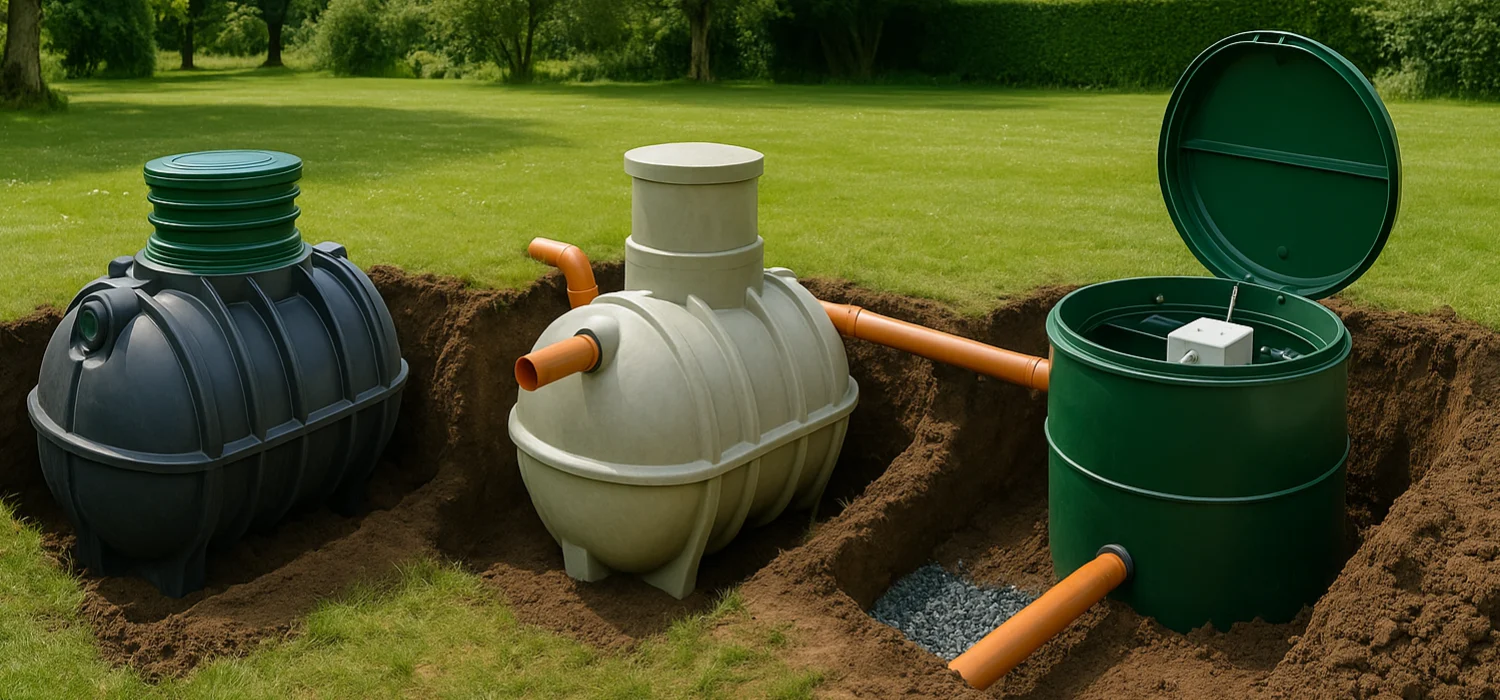
A cesspit is a sealed, watertight tank that collects sewage and waste water. It doesn’t treat waste — it simply stores it until it’s emptied by a tanker. Cesspits require frequent emptying and are typically used in locations where treatment or discharge isn’t possible.
What is a Septic Tank?
A septic tank separates solids from liquids and allows partial treatment of waste. The solids settle in the tank, while the liquid is discharged into a drainage field. It’s an affordable system for rural properties, but modern regulations often require upgrades to meet environmental standards. We offer septic tank conversions to help homeowners stay compliant.
What is a Sewage Treatment Plant?
A sewage treatment plant is the most advanced option, offering full biological treatment of waste. The resulting water is clean enough to discharge directly into a stream or watercourse. These systems are eco-friendly and suitable for modern building standards.
Which System is Right for You?
- Cesspit: Best for remote areas where no discharge is allowed. High maintenance and costly in the long term.
- Septic Tank: Ideal if you have land for a soakaway, but may require conversion to meet regulations.
- Treatment Plant: Perfect for environmentally conscious homes or properties near watercourses — minimal odour, cleaner output.
Key Considerations
Before deciding on a waste system, consider the following:
- Ground conditions and space availability for soakaways or tanks
- Compliance with Environment Agency discharge rules
- Access for installation equipment and emptying vehicles
- Maintenance schedules and long-term running costs
Still Unsure? We Can Help
Every property is different. That’s why we offer site visits and expert assessments to help you choose the right system. Whether you’re looking to replace a cesspit, upgrade a septic tank, or install a new treatment plant, contact Alton Facility Services today.
Your home deserves a reliable, compliant waste system. Let Alton Facility Services help you make the right choice — with installation, upgrades, and maintenance across the South of England.
Speak to Alton Facility Services for practical drainage, pump or wastewater advice.
Contact AFS