
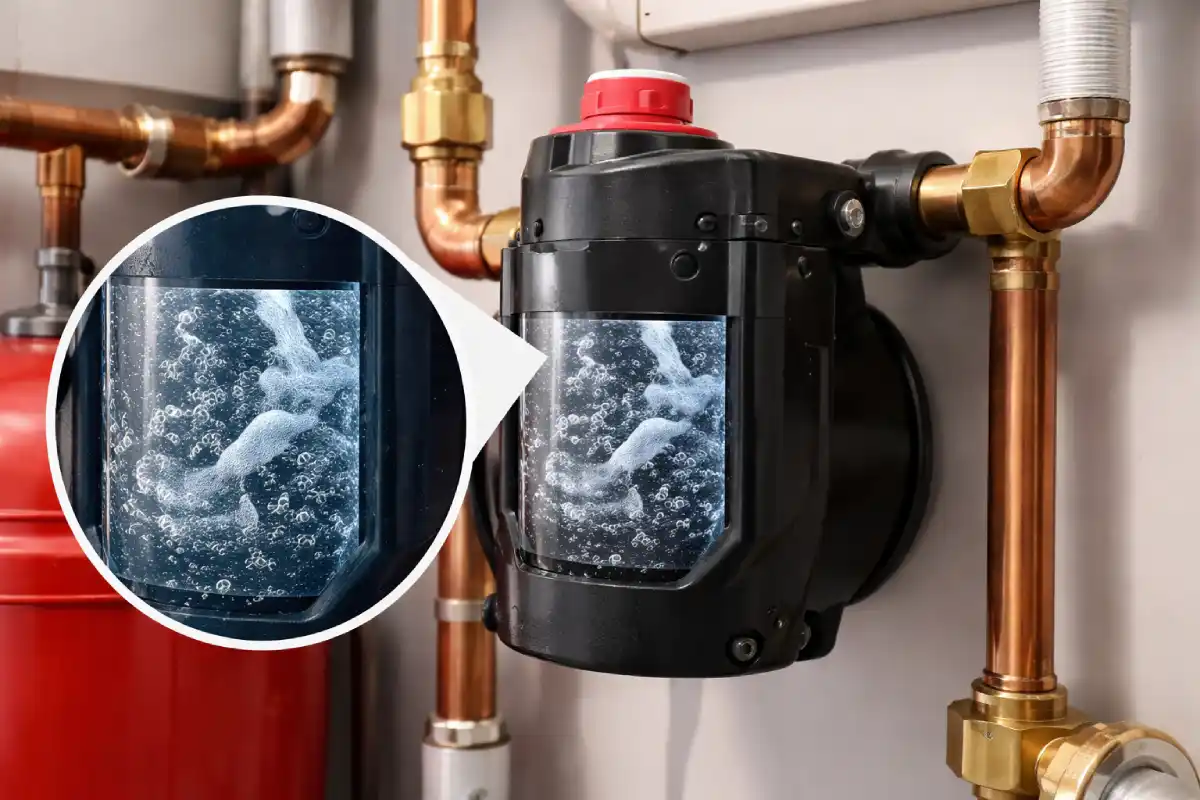
If the motor is running but the pump is not moving water, switch it off if safe—continued dry running or strain can cause further damage.
The most common causes are loss of prime, a blocked suction line or filter, an air leak, a closed or failed valve, low supply, an impeller fault or an electrical/control problem.
Start with safe visible checks only; sewage, electrical, overheating or flooding risks need a competent engineer.
Quick answer: why the pump runs but no water comes out
When a pump motor runs but no water moves, the system is failing to create or maintain the flow needed for normal operation.
This usually means water is not reaching the pump correctly, the pump cannot create suction, or internal components are damaged or blocked.
If you are seeing other symptoms too, our pump system problems guide explains wider pump fault signs.
- Loss of prime
- Blocked suction line or filter
- Air leak in the suction pipework
- Damaged, worn or blocked impeller
- Closed, stuck or faulty valve
- Low water supply or source issue
- Electrical or control system fault
Safe checks before diagnosis
If the pump continues to run without moving water, switch it off if safe to do so. Running a pump dry or under strain can cause further damage.
Electrical and control faults should be checked by a competent engineer. Do not continue using a pump system if there are burning smells, overheating, repeated tripping or signs of electrical damage.
Safe visible checks can include confirming the water source or tank level, that relevant valves are open, and that accessible filters or strainers are not blocked. Do not force a damaged valve.
1. Loss of prime
Loss of prime is one of the most common causes. This happens when the pump is no longer filled with water and cannot create the suction needed to move it.
This can happen after maintenance work, draining down, low water levels, air entering the system or a leak on the suction side.
Common signs include the pump running normally but no water output, air in the system, gurgling sounds, and repeated difficulty getting the pump to operate.
The pump may need to be re-primed by filling it with water and removing trapped air. The exact process depends on the pump type and system layout.
If the problem returns, there may be an air leak, failed non-return valve, damaged seal or suction issue that needs investigation.
2. Blocked suction line or filter
If water cannot reach the pump, it will not be able to move it. Blocked suction lines, filters, strainers or inlets can all restrict flow.
This is common where debris, silt, sludge, scale or foreign material has built up in the system.
Symptoms include reduced flow, no output, strain on the pump, debris in filters, or the pump sounding like it is working harder than normal.
Filters, strainers and accessible pipework should be checked and cleaned. If the blockage is deeper within the system, professional inspection may be required.
Regular servicing helps prevent this type of fault. See our pump maintenance checklist for prevention checks.
3. Air leaks in pipework
Air entering the pipework can prevent the pump from maintaining suction. Even a small air leak can disrupt normal flow and cause the pump to run without moving water properly.
Common signs include gurgling, inconsistent flow, pressure changes and difficulty maintaining prime.
Air leaks often occur around joints, seals, unions, suction pipework or poorly sealed fittings.
Check visible joints, fittings, pipework and seals for signs of leaks or poor connections. Any damaged or loose parts should be repaired or replaced.
If the leak is not visible, a professional pump engineer can pressure test or inspect the system to identify the source.
4. Damaged or worn impeller
The impeller is the component that moves water through the pump. If it is worn, damaged, blocked or detached, the motor may run but the pump will not move water effectively.
This can happen because of wear, debris, running dry, cavitation or long-term system strain.
Symptoms include the pump running but no output, reduced flow over time, unusual noise, vibration or sudden loss of performance.
An impeller fault usually requires inspection and repair by a pump engineer. The impeller may need cleaning, repair or replacement.
If the pump is older or several components are worn, replacement may be more cost-effective. Read our pump repair vs replacement guide for more advice.
5. Closed, stuck or faulty valves
A closed or faulty valve can stop water flowing through the system even if the pump itself is running.
Valves may be accidentally left closed after maintenance, become stuck over time, or fail internally.
Signs include no water movement, pressure issues, vibration or the pump working against a restriction.
Check that isolation valves and relevant system valves are open and operating correctly. Do not force damaged valves, as this can make the problem worse.
If a valve is stuck, leaking or not operating correctly, it may need repair or replacement.
6. Low water supply or source issue
If there is not enough water reaching the pump, it cannot operate properly. This can happen because of low tank levels, supply interruption, poor mains pressure, blocked feeds or source problems.
In some cases, the pump may continue running while failing to move enough water, which can increase the risk of overheating or dry-running damage.
Check the water source, tank level, supply pipework and feed valves. If supply is inconsistent, the wider system may need assessment.
A correctly specified pump system should be matched to the available supply and demand.
7. Electrical or control system faults
Sometimes the pump motor may appear to run, but control faults prevent the system from operating correctly. This can involve sensors, float switches, pressure switches, wiring, control panels or protection devices.
Warning signs include pumps running continuously, alarms, inconsistent operation, control panel faults or pumps not responding as expected.
Electrical and control faults should be checked by a competent engineer. Do not continue using a pump system if there are burning smells, overheating, repeated tripping or signs of electrical damage.
You may also find our pump control panel replacement cost guide useful.
Symptoms and likely causes at a glance
Use these symptom patterns as a starting point only. More than one fault can be present, so a repeated or safety-critical problem still needs proper diagnosis.
- Gurgling, air or repeated loss of flow: loss of prime or a suction-side air leak.
- Reduced or no flow with debris in filters: a blocked suction line, filter, strainer or inlet.
- Unusual noise, vibration or sudden loss of performance: a blocked, worn or damaged impeller.
- No flow after maintenance: a closed valve or loss of prime may be involved.
- Alarms, repeated tripping or inconsistent operation: an electrical or control fault may be involved.
When to switch the pump off and call an engineer
You should act quickly if the issue happens suddenly, the pump runs continuously without output, the system is overheating, there are unusual noises, or the water supply or drainage function has stopped completely.
Continuing to run a pump that is not moving water can cause further damage. If the system is critical, wastewater-related or at risk of flooding, arrange urgent inspection.
How AFS checks domestic, booster, drainage and wastewater pumps
A pump running without moving water can have several possible causes, so proper diagnosis is important. Re-priming the pump may only provide a temporary fix if there is an underlying leak, valve fault, blockage or internal component problem.
At Alton Facility Services, we provide pump inspection, fault-finding, repairs and replacement advice for domestic, commercial, drainage and wastewater pump systems.
Pump faults are often caused by more than the pump itself. AFS would normally check the pump, floats, valves, non-return valves, control panel, electrical supply, alarm circuit, discharge pipework, chamber condition and signs of blockage or overload.
Where the system is critical, the safest route may be urgent pump station repair, planned pump servicing, or a properly specified pump installation rather than repeated temporary resets.
Repair, service or replace?
A pump can often be repaired if the issue is a blockage, float fault, worn component or control issue. Replacement is more likely where the pump is badly worn, incorrectly sized, unreliable, obsolete or repeatedly failing.
For sewage and wastewater systems, AFS can also review the wider chamber, rising main and control arrangement. That matters because a new pump will not solve a poor installation, undersized rising main or failed control panel.
Preventing another no-flow fault
The best way to prevent this problem is through regular inspection and maintenance. Filters, strainers, seals, valves, controls and pressure components should be checked before faults become serious.
Routine servicing can identify early signs of air ingress, blocked pipework, worn components and control issues before they cause a complete loss of flow.
For wider causes of failure, read our guide to why pump systems fail.
Book a pump inspection
For pump faults, pump station alarms, servicing, repair and replacement, AFS can check the wider system and advise whether the issue is mechanical, electrical, hydraulic or installation-related. Call 01420 561661 or book a pump inspection.
Call AFS on 01420 561661 or send the details through for practical advice.
Contact AFSFrequently asked questions
Why is my pump running but not pumping water?
Common causes include loss of prime, a blocked suction line, air leaks, closed valves, a damaged impeller, low water supply or control system faults.
Can a pump run dry?
Yes. If a pump runs without water, it can overheat or damage internal components. Switch it off if safe and arrange inspection.
Can I fix a pump that has lost prime myself?
Some pumps can be re-primed, but if the problem keeps returning there may be an air leak, valve fault or suction problem requiring professional diagnosis.
Does no water flow mean the pump is broken?
Not always. The cause may be a blockage, valve issue, air leak or supply problem. However, internal pump faults are also possible.
How quickly should this be fixed?
As soon as possible, especially if the pump is running continuously, overheating, making noise, or the system is critical to water supply or drainage.
Can AFS diagnose pump faults as well as replace pumps?
Yes. AFS can check the pump, floats, panel, alarms, pipework and chamber to determine whether repair, servicing or replacement is the right option.