Failure investigation
We review wet ground, odour, slow drainage, backing up, damaged pipework, solids carry-over and other evidence that may point to a failing system.

Assessment, investigation and practical groundworks for failed, overloaded or unsuitable septic-tank drainage fields across Hampshire and surrounding counties.
A drainage field is an infiltration system for treated wastewater. It is not the same as a rainwater soakaway.
A septic tank separates solids from wastewater before the liquid passes to a drainage field. Perforated distribution pipes laid in trenches allow the effluent to infiltrate through suitable ground for further treatment.
AFS can review the tank outlet, distribution arrangements, pipework, visible ground conditions and failure symptoms. The appropriate next step may include investigation, clearing or repairing damaged connections, drainage field replacement, a treatment-plant upgrade or a different compliant solution.
Send the property postcode, occupancy, tank details, emptying history, photographs and any drainage drawings or previous reports. A site assessment and further testing may be required before works can be specified.
We review wet ground, odour, slow drainage, backing up, damaged pipework, solids carry-over and other evidence that may point to a failing system.
Available land, ground conditions, groundwater risk, access, existing services and the discharge history all affect what can sensibly be proposed.
Where suitable, AFS can quote for agreed pipework, distribution, excavation, drainage-field and reinstatement works.
Provide the address, occupancy, tank type, last emptying date, symptoms, plans and photographs if available.
We establish the likely discharge route, condition, access constraints and whether investigation or specialist design information is needed.
You receive a practical scope for repair, replacement, further assessment or a wider off-mains drainage upgrade.
At a private rural property in the New Forest, Hampshire, a traditional below-ground drainage field was not suitable, so AFS built a raised mound drainage field, designed around a 15 by 3 metre area, for the existing treatment plant. It has a stone base, graded filter sand, three 110mm perforated distribution laterals, geotextile membrane and a topsoil finish, with a small automatic pump chamber feeding treated water into the mound gradually.
 Drainage stone and distribution pipework
 Automatic pump chamber on the treatment plant discharge
 The finished mound drainage field
The Environment Agency explains that a drainage field is a series of perforated pipes laid in trenches so wastewater can pass through the ground for further treatment. Its current guidance also explains the General Binding Rules, discharge limits, standards and circumstances in which a permit may be needed.
Read the official General Binding Rules guidance for discharges to ground. The guidance applies in England and should be checked alongside project-specific planning, building-control and environmental requirements.
Work our engineers and crews have finished recently, from our own job updates.
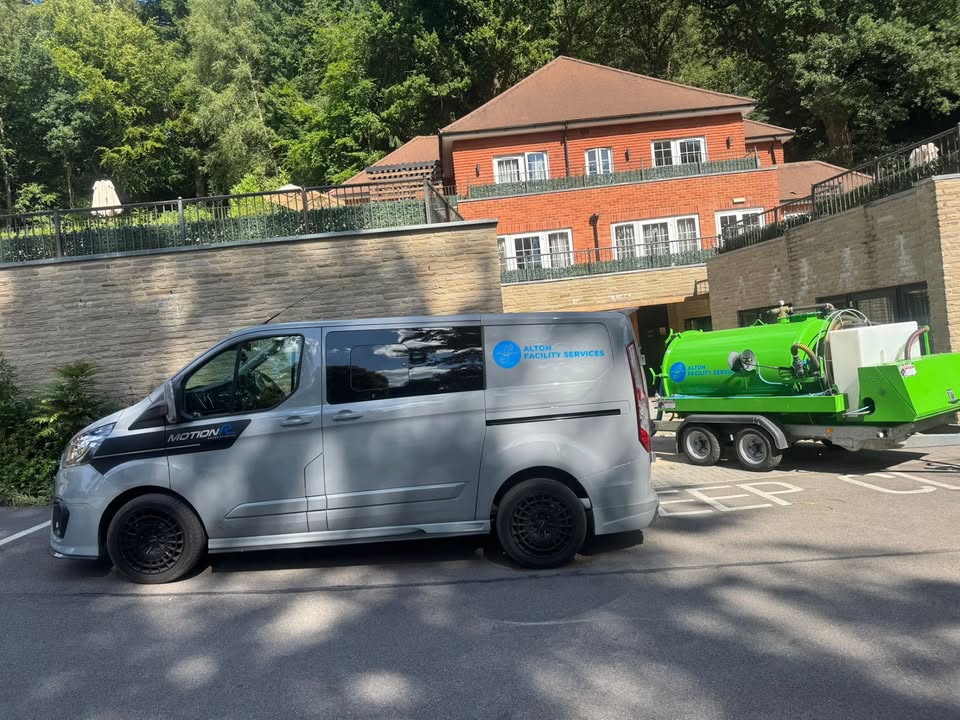 What’s Included in a Septic Tank Empty?
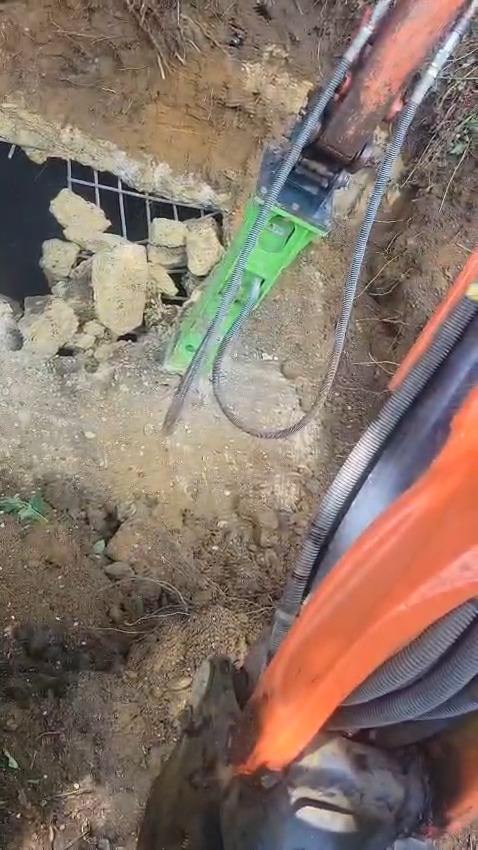 Septic tank replacement in Oxted
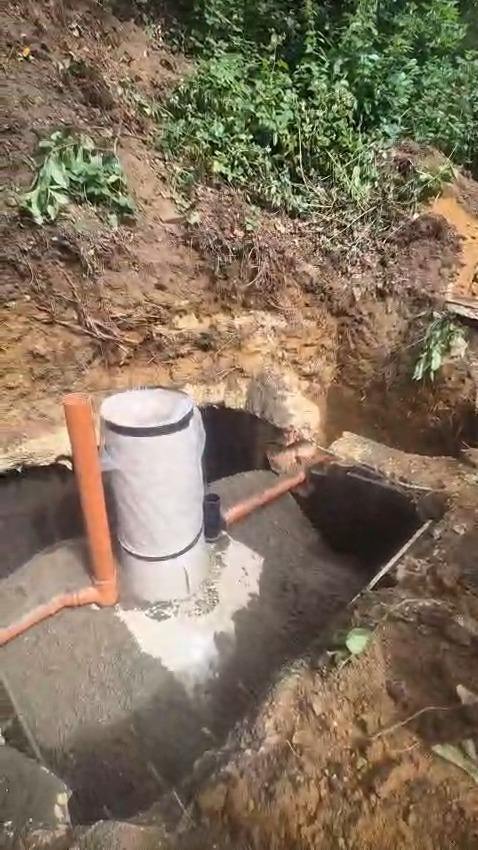 New Septic Tank Installation at Oxted Fire Station
Send the details through and a member of the AFS team will come back to you.
No. A drainage field is an infiltration system that receives wastewater effluent after treatment. A rainwater soakaway is designed for clean surface water. The systems have different purposes and requirements.
Sometimes, particularly where the problem is damaged or blocked connecting or distribution pipework. Saturated, unsuitable, undersized or exhausted ground may require a new field or a different system. The cause needs to be assessed first.
A septic tank must not discharge directly to surface water. Depending on the property and site, the solution may involve a compliant drainage field, connection to the foul sewer, or a suitable sewage treatment plant and permitted discharge route.
Possible causes include unsuitable soil, saturation, excessive loading, poor design or distribution, physical damage, age, and solids entering the field because the tank was not desludged correctly.
Site and ground testing may be required to establish whether land is suitable and to inform a new drainage-field design. The necessary assessment depends on the project, site and applicable approval requirements.
Send the postcode, number of occupants, tank details, emptying history, symptoms, photographs, approximate field location and any plans, permits, surveys or previous reports.
Send an enquiry or call the AFS team. We’ll confirm the practical next step and whether a site visit is needed.